
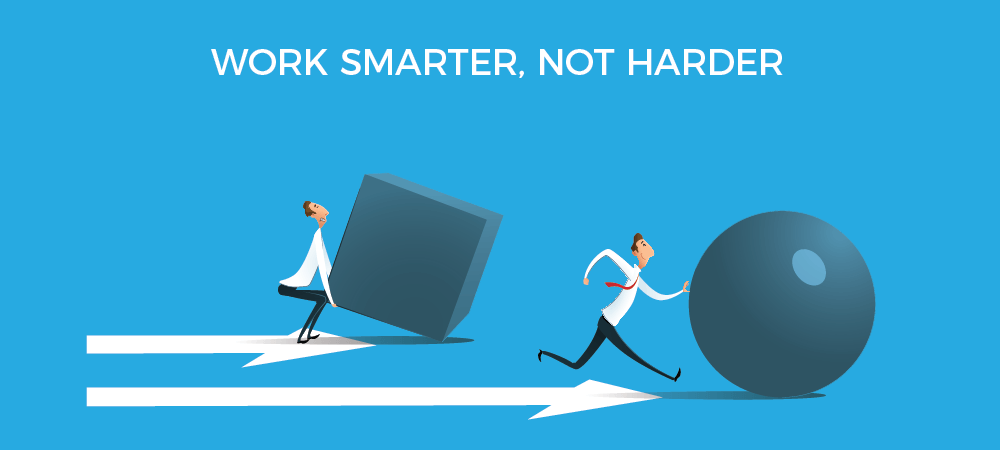
Success Isn’t About Working Harder—It’s About Leading Smarter
For years, we have celebrated the idea of working harder than everyone else. Long hours, sleepless nights, and endless hustle have often been portrayed as the only path to success. While dedication will always be important, modern leadership is teaching us a different lesson.
Success today is no longer about doing more. It’s about doing what matters most.
The world’s most respected leaders are not successful because they work twenty hours a day. They succeed because they know how to prioritize, delegate, build strong teams, and make decisions that create long-term value.
Unfortunately, many women entrepreneurs fall into the trap of believing they must handle every responsibility themselves.
They manage operations.
They answer customer emails.
They oversee marketing.
They review finances.
They solve every problem.
While this level of commitment is admirable, it is rarely sustainable.
A business cannot grow if the founder becomes its biggest bottleneck.
One of the most important transitions every entrepreneur must make is moving from working in the business to working on the business.
That shift changes everything.
Instead of solving every daily task, great leaders build systems.
Instead of making every decision alone, they develop capable teams.
Instead of reacting to every challenge, they focus on creating long-term strategies.
Leadership begins when control gives way to trust.
Trusting a team does not mean lowering standards.
It means creating an environment where people are empowered to perform at their best.
The strongest organizations are built on shared responsibility, open communication, and accountability—not micromanagement.
Technology has made this transition easier than ever.
Automation, project management platforms, customer relationship management systems, artificial intelligence, and data analytics now allow founders to spend less time on repetitive tasks and more time on innovation and growth.
However, technology alone cannot replace leadership.
People still want leaders who listen.
Employees still value recognition.
Customers still remember exceptional service.
Partners still choose businesses built on integrity.
The future belongs to organizations that combine operational efficiency with genuine human connection.
Another overlooked aspect of leadership is the willingness to say “no.”
Not every opportunity deserves your attention.
Not every partnership fits your vision.
Not every trend aligns with your business.
Focused leaders often achieve more because they intentionally choose fewer priorities.
As editors, we regularly meet women who underestimate their own leadership potential.
They wait until they feel completely prepared.
They postpone launching their ideas.
They hesitate before speaking publicly.
But leadership has never required perfection.
It requires action.
Confidence rarely appears before the first step.
It grows because of it.
Every successful woman featured in this magazine started with uncertainty.
What separated them from others was not extraordinary talent.
It was consistent action despite uncertainty.
That is the true definition of leadership.
As businesses continue to evolve, one principle remains timeless.
Leaders who create systems instead of dependency…
Who develop people instead of controlling them…
Who inspire trust instead of demanding authority…
Will always build organizations capable of lasting success.
Perhaps the future of leadership isn’t about working harder at all.
Perhaps it’s about leading smarter.
Editor’s Perspective
Smart leadership is not measured by how busy you are but by how effectively you create value for your team, your customers, and your vision.
Editor’s Quote
“The strongest leaders don’t carry the entire business—they build teams capable of carrying the vision.”